
A new initiative at Kingston Health Sciences Centre (KHSC) is helping children with congenital or inherited heart disease safely participate in school physical activities and sports - and feel more included while doing so.
The Pediatric Cardiology Clinic at the KHSC’s Hotel Dieu Hospital (HDH) site has launched the Promoting Active Sports and Safety (PASS) project, a clinic-issued “Heart Health School Passport” designed to give schools clear, individualized guidance on which activities a child can safely take part in, what to watch these kids for and what to do in case of emergencies.
The project was developed through funding from KHSC’s Patient & Family-Centred Care (PFCC) Grant Fund, supported by donor contributions through the University Hospitals Kingston Foundation.
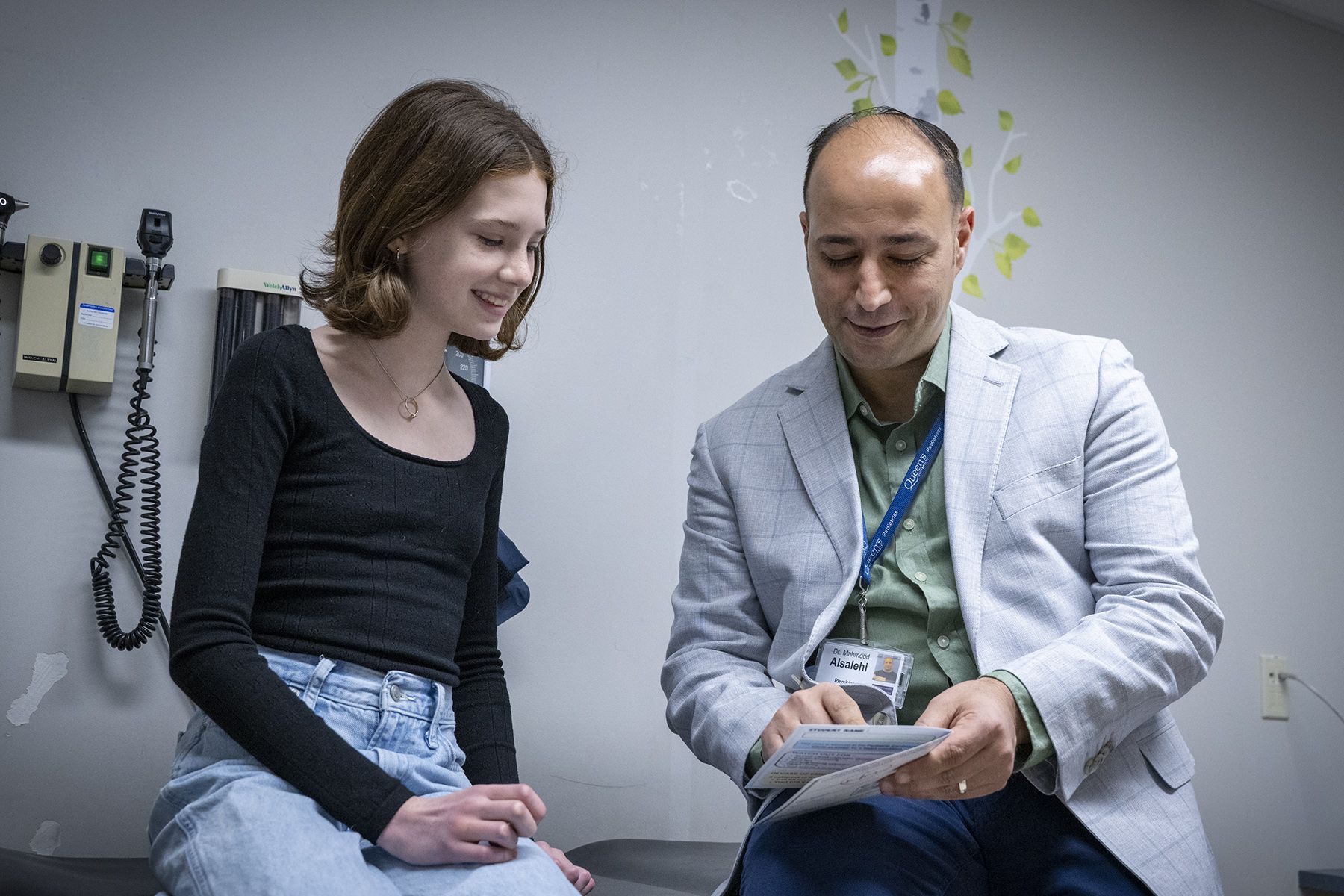
Dr. Mahmoud Alsalehi, a Pediatric Cardiologist at KHSC and Assistant Professor of Pediatrics at Queen’s said the idea emerged from a topic that kept coming up during discussions in the clinic.
“Most children with congenital heart disease can safely participate in regular school activities, including gym classes and sports,” Dr. Alsalehi said. “However, in practice, some children are still unnecessarily asked to sit out because teachers are unsure what is safe.”
He says that families often request letters to confirm their child’s ability to participate at school, while others assume restrictions are required and never seek clarification.
“The Heart Health School Passport was created to address these challenges,” he said. “It’s a short, individualized document explaining what activities the child can safely participate in, any restrictions if needed, and what to do if symptoms occur.”
The Pediatric Cardiology Clinic at HDH provides outpatient care for patients under 18 with heart conditions, including congenital heart disease, and sees hundreds of patients annually - many of them school-aged.
Designed to reduce uncertainty for educators and families, the passport offers consistent, plain-language information.
“The biggest barrier was uncertainty,” Alsalehi said. “Teachers and coaches want to keep children safe, but without clear guidance they often choose the most cautious option.”
Beyond improving communication, the initiative also aims to support children’s confidence and sense of belonging.
“When children know their school understands their condition and supports their participation, they are more comfortable joining their peers,” he said.
A key feature of the project is that it was developed with direct input from patients and families.
Pediatric resident, Dr. Rebekah Hunter, organized virtual meetings with three of Dr. Alsalehi’s patients to involve them in the design of the Heart Health School Passport. Eloise Bergeron, one of those engaged in the design portion of the project, said being involved made the project feel more meaningful.
“I think it was cool how they didn’t just design it themselves,” she said. “We got to help make changes to make it feel more kid-friendly and fun.”
Participants reviewed and edited draft versions using design software, suggesting changes to layout, wording and tone. One notable change from Bergeron, was renaming the document from “Heart Disease School Passport” to “Heart Health School Passport.”
“That felt much more inclusive,” Bergeron said.
Her mother, Emberly Doherty, said the experience reflected a more human approach to care.
“To have that kind of initiative - where they reach out and say, ‘we’d like you to be part of this’ - was really meaningful,” she said. “It gives families a sense of ownership over what’s being shared with schools.”
As both a parent and a teacher, she said the passport could make a practical difference in classrooms.
“Having that kind of document come into a school is really helpful,” she said. “It’s user-friendly and focuses on what the child can do, not just their diagnosis.”
The project also aligns with core principles of patient- and family-centred care, including dignity, respect, information sharing and collaboration. The passport allows families to decide whether to share it and ensures only essential health information is included.
The initiative launched with the goal of distributing 400 passports over two years, with about 50 already in circulation. Families receive the document during routine clinic visits, where clinicians personalize it with the child’s condition and any activity guidance.
Participation is voluntary, and early feedback will be collected through surveys and followup reports.
Alsalehi said the project demonstrates how small, low-cost initiatives can have a meaningful impact.
“Many meaningful healthcare initiatives start with the concerns raised by families,” he said. “Even though this is a simple tool, it can reduce confusion, support safe participation, and improve the overall experience for children and their families.”